Sunday at Mylapore Cafe
Read this on Substack.
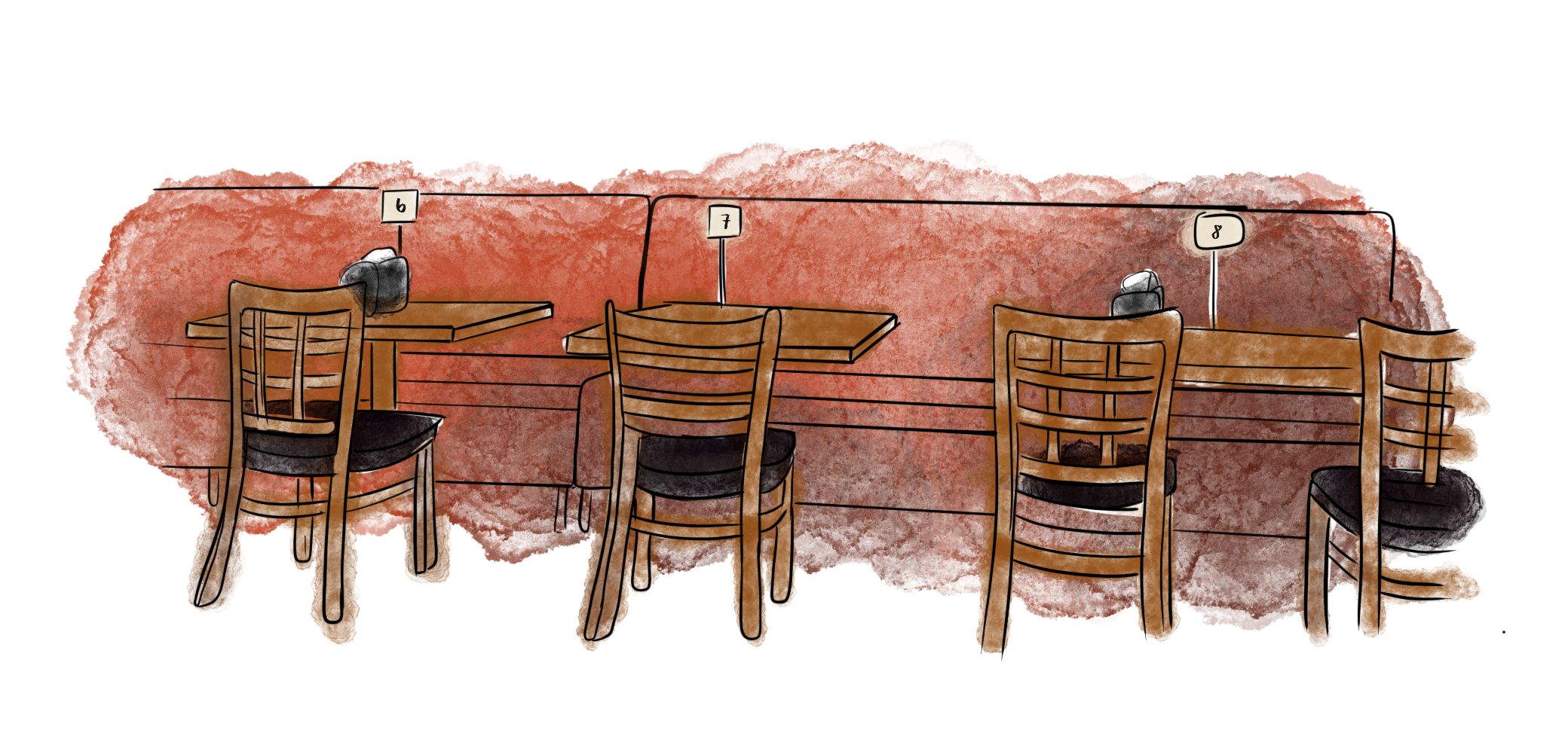
It’s a Sunday afternoon at Mylapore cafe. The cafe is full, with wooden tables pressed up to orange leather booths and a garland-adorned murti on the host’s podium. A man in a green polo hands my mother a card with a large 23. When we walk up to the counter, my mom orders for me — two filter coffees. She turns to me. “Do you want anything else?”
“One medhu vada, please.”
My favorite South Indian snack are donut-shaped, deep-fried lentils dunked in coconut chutney. For the filter coffee, we get two plastic tokens that we hand to a hairnet-wearing man pouring coffee from one steel tumbler to another. As he pours, he raises his hand higher and higher, and the light brown liquid forms a two-foot waterfall as it streams down, He makes eyes at me, then turns and starts flirting with my mom, which makes me laugh.
He serves us foamy coffee at the counter in a steel cup, the kind that has no handles. Rather than a saucer, the cup sits in a shallow bowl. I follow my mother’s lead and pour coffee into the bowl to let it cool. I raise the bowl to my lips and my mom yelps.
“You don’t drink out of the bowl. You pour it back into the cup and it cools the entire cup down.”
Our vada arrives barely a minute after we sit down. I am shocked at the efficiency of the establishment. My memories of Indian restaurants at home are of grimy velvet booths and peeling pleather chairs, of waiters in rumpled white shirts and dirty black aprons, of greasy Chicken 65 that took so long to come out that I would get full off my mango lassi before any food arrived. Here, the linoleum floors are clean, sunlight streams through the windows, the waiters pass through the tables laden with trays of chutney for patrons to pick off of.
Two tables down from us, a young girl sits with her parents in a Bharatnatyam costume, thick eyeliner and red lips. Sitting at the table next to us, a newly wed couple — evidenced by the young woman’s hands, which are heavy with gold bangles and dark with henna — chatter in Hindi. The orange booths towards the counter are full of a party of ten women in Kurti tops and jeans. They surround a lady who I can only presume is the birthday girl, judging by the roses that the waitstaff thrust into her embarrassed hands after her friends sing Happy Birthday to her.
This is my first summer at home in a while. I’ve been passing through increasingly glamorous cities for three months at a time — back and forth between Stanford, Seattle, New York, Paris. Home has been my weeklong pitstop on the back to my more exciting life at school or a new internship, and this is intentional. Being back in Cupertino has always exposed to me the uncomfortable limbo of getting older. My world, which feels like it has gotten so much bigger, is forced to be small again. I go to the mall with my friends, but it doesn’t feel like the same gravity of outing. We get boba at night, but the caffeine makes me jittery and messes up the sleep schedule that I’m so anal about. The hours spent driving around the foothills or sitting in Target parking lots feel like a trivial waste of time. In the effort to avoid this comparison, this uncomfortable juxtaposition of growing older and the things that once felt adult and exciting not feeling that way anymore, I avoid being home for too long. I don’t like the feeling of growing up.
As a result, I’ve made coming home the past couple of years a production. My mom makes food I like, I live out of a suitcase that I don’t bother unpacking, and in a week or two, I’m on a plane again. Vienna and Prague and Boston and Bangalore are a lot more glamorous-sounding than Cupertino, after all. And none of those cities are so banally suburban that all I can do is just sit and think.
I graduated in June, and hit with a wave of indecision about my future — New York or San Francisco? Finance or tech? — I forced myself to stop running. There are things about home that I had forgotten.
I wake up on Sunday mornings and I am lighter. The pressure of living a life worth talking about, to maximize my time in a city does not exist for me here.
My grandmother makes me an omelet every morning with green chillies. As I eat, I sit with her and my grandfather, who reads the newspaper. All of their movements are slow — the hands that peel a banana, the turning of a page of the paper, the chewing of a piece of toast.
Every meal is a game of Tetris with leftovers. There’s an almost mission-like commitment to finishing every morsel of food that was cooked, a deep satisfaction with each Tupperware whose contents are successfully emptied.
I, who am not typically a very irritable person, regress to the shouting matches of my youth with my mom. I feel like a match waiting to be lit, one passive aggressive comment away from a firefight of deeply personal insults hurled at each other, a fight that makes me ashamed to think despite all in my life that has changed, I still am not mature enough to abstain from these petty arguments. But the flame dies as quickly as it lights, and I am sitting next to her looking at my aunt’s Facebook posts before the lump in my throat has been given the chance to subside.
I go on long runs with my dog, to and from my middle school. I pass couples my parents age in tech company-branded jackets and middle schoolers on bikes. The sky is pink, the mountains are blue. When I time my run badly and light from the sinking sun is replaced by streetlights that flicker on before I get home, my mom calls me concernedly to get back before it gets dark. It is nice to be worried about.
Some weekends, I haul myself up to San Francisco in a hodgepodge of Caltrain stops and Ubers. I drink rose at a wine bar in North Beach or shout over a crowd at a friend’s housewarming. I see a glimpse of what my life once was, and what it will soon be — back to school in September, and I’ll probably move to San Francisco in January. I run into faces from college in the street and sleep over in my high school friend’s apartment after the bars shut down. But in the morning, I’m eager to get home. Cold, gray San Francisco mornings transform into the relentless sunshine of the South Bay, and I savor it — savor the long, hot shower, the omelet that waits for me when I come down.
In the afternoon, my mom and I go shopping. If there are museums worth visiting in Cupertino, I have never seen them — we go to Nordstrom Rack or TJ Maxx and hunt down Steve Madden shoes at an 80% markdown. Before we go home, we walk across the shopping plaza and stop for filter coffee at the Indian cafe in the corner.
Sunday afternoon at Mylapore cafe is the stages of my life at home, I think. I remember being the young girl in a Kathak outfit, rather than a Bharatnayam one, a false braid bobby-pinned to my real one, simultaneously uncomfortable in itchy silk and savoring all the attention that being dolled up was giving me. I picture my parents at the age of the couple that sits next to me, freshly married, hunting down the type of cafe that reminded them of India. It is strangely satisfying, to be surrounded by all this sameness, all of these versions of my own family, awkward teenagers and lively aunties and a reminder of the place and people that raised me.
In early September, all the high schoolers at the mall sport colorful threaded Rakhi bracelets along with their mountains of curly hair and diamond studs. My best friend and I cure our hangovers by shopping but not buying anything for hours. It’s like high school, but different — we talk about work with equal parts excitement and nervousness rather than about boys. In high school we would convince each other to buy things, and now we do the opposite — “you don’t need that Nika, that is ugly and definitely not worth $50” — but still collapse with obnoxious laughter in Zara.
On the drive home, we marvel at how the day felt like one from the summer before college and that it is now the summer after college, how so much has changed, but the drive from the mall under the orange sky feels the same. We play the songs we once loved, and in between belting the lyrics, reminisce about the magic of falling in love for the first time, at how we had the time to drive to each other’s houses every morning and tell each other how we were barely able to sneak back in without detection the night before. There is no need to sneak in now.
I think about making lychee martinis on my friend’s rooftop on the Lower East Side. I think about the loud, sweaty frat parties where I would run into my math TA on the weekend and hug them in a moment of equal disbelief and glee that this person could exist beyond the reality of my problem set. I remember jazz DJ shows in Paris and paddle boats in the park in Seattle and getting ready with my college roommates, all of us borrowing each others’ clothes and makeup while singing along to our favorite songs. I made a good life for myself in many cities, doing many wonderful things, discovering what it meant to grow up, to see more and live better, to experience a life that still probably exceeds my parents’ imaginations.
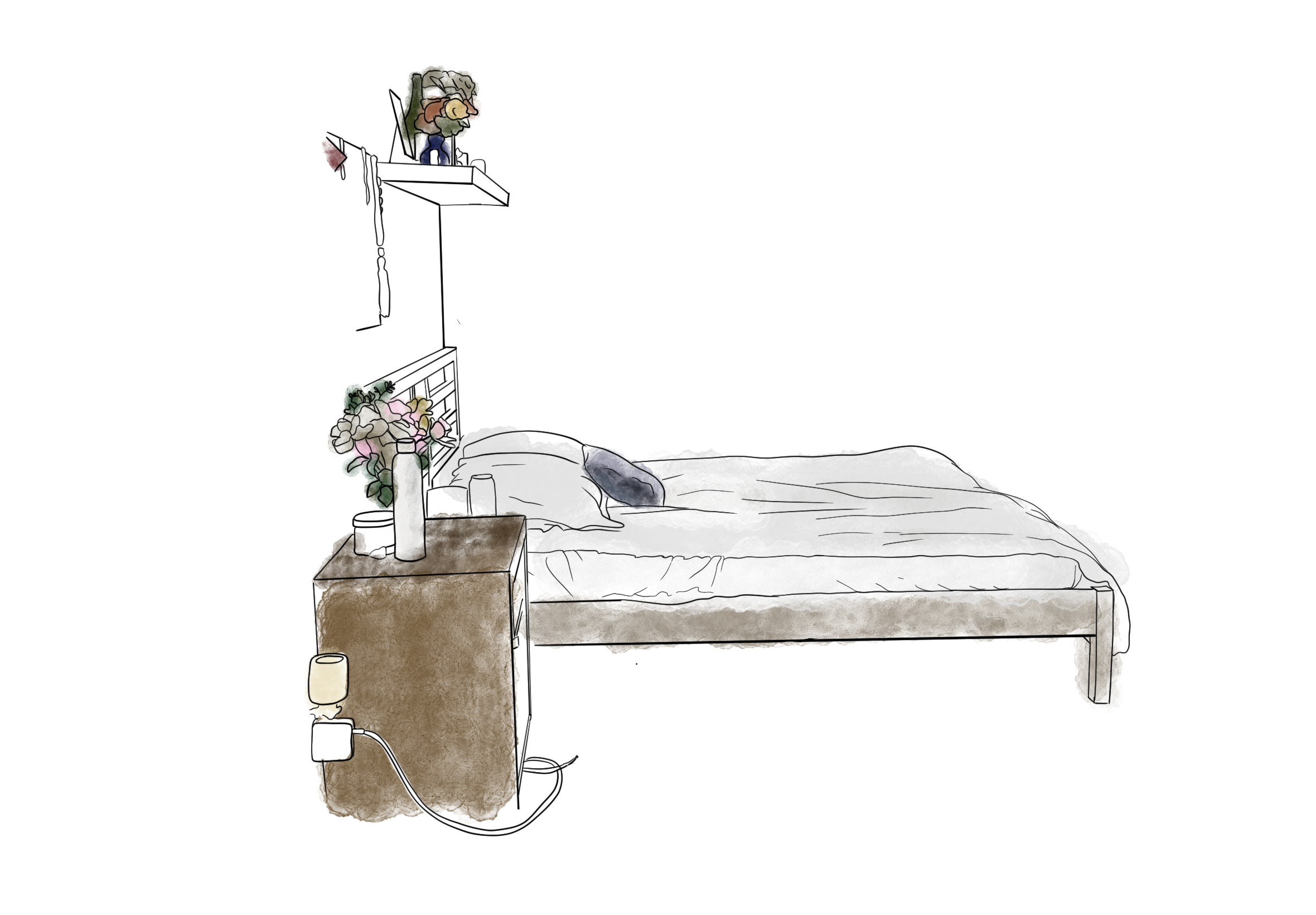
But for now, I am sitting on my bed, writing this in my childhood bedroom. My house smells pleasantly of incense and I can hear the clang of pots and pans being shuffled around downstairs. In a minute, my mother will yell up the stairs for dinner, in the morning, I will go to work, in a couple weeks, I’ll be back to the life I’m used to, loud and colorful and adult. But briefly, I am 11 or maybe 16. I have school tomorrow, I just got home from soccer practice, I am home with all the people that raised me.
Briefly, time is infinite.