To be extraordinary
Read this on Substack.
It was the quiet that kept her up for days.
There were no more peddlers’ shouts filtering through white curtains that danced in the hot breeze. There were no more deep whistles from trains that passed by in the distance or choruses of honking cars punctuated with shouting taxi drivers. There were no more women ambling into the house with bangles jingling to gossip in musical voices and drink hot chai with biscuits.
The quiet was a blanket that settled over the Virginia apartment, a silence that suffocated her and simultaneously screamed with loneliness. She tried not to think of home, tried to convince herself that this country, with its identical houses and glittering buildings and incredible silence, was home.
When my mother landed at Philadelphia International Airport with $50 in her pocket, the first thing she noticed was how big everything was. The buildings craned their necks towards the clouds, sparkling in the white sunlight that illuminated the airport with an opulent glow through the overcast sky. She took a short plane ride from Philadelphia to Roanoke, Virginia where my father, who’d already been in the U.S. for a year at the time, picked her up. He took her to Macado’s, a famous chain in Blacksburg, where she met his friends, whom she liked, and ate a giant club sandwich, which she hated.
The second day was the hardest. My father had to return to his job as a research assistant at Virginia Tech where he studied engineering, and my mother, who’d be attending University of Kentucky but whose school didn’t start for another month, was left alone in their apartment all day. She turned on the TV and was baffled by The Price is Right, a game show where contestants merely guessed a price correctly and then won entire cars — there was more wealth surrounding her than she’d seen before in her life. But even the TV wasn’t enough to drown out the thunderous silence that pressed against the lump in her throat, the silence that finally let the tears that longed for home flow.
My father showed her his America in the first couple of weeks before school — who his friends were, how to take the bus to get to school, where to buy coffee and books. He took her to a lake where they swam in the freezing water and to the movies where she fell in love with Jack Ryan as he fought drug cartels in “Clear and Present Danger.”
As months passed, my mother discovered an Indian grocery store where she could buy spices and Taco Bell, the only fast food that tasted good to her. She started working as a TA, sending the money home to her parents, and made friends with other Indian girls. When my father had holidays, he’d make the six hour drive from Virginia to Kentucky and they would explore her America together — he’d meet her friends and see her school and eat the food she cooked in her tiny apartment with the spices that reminded them of home.
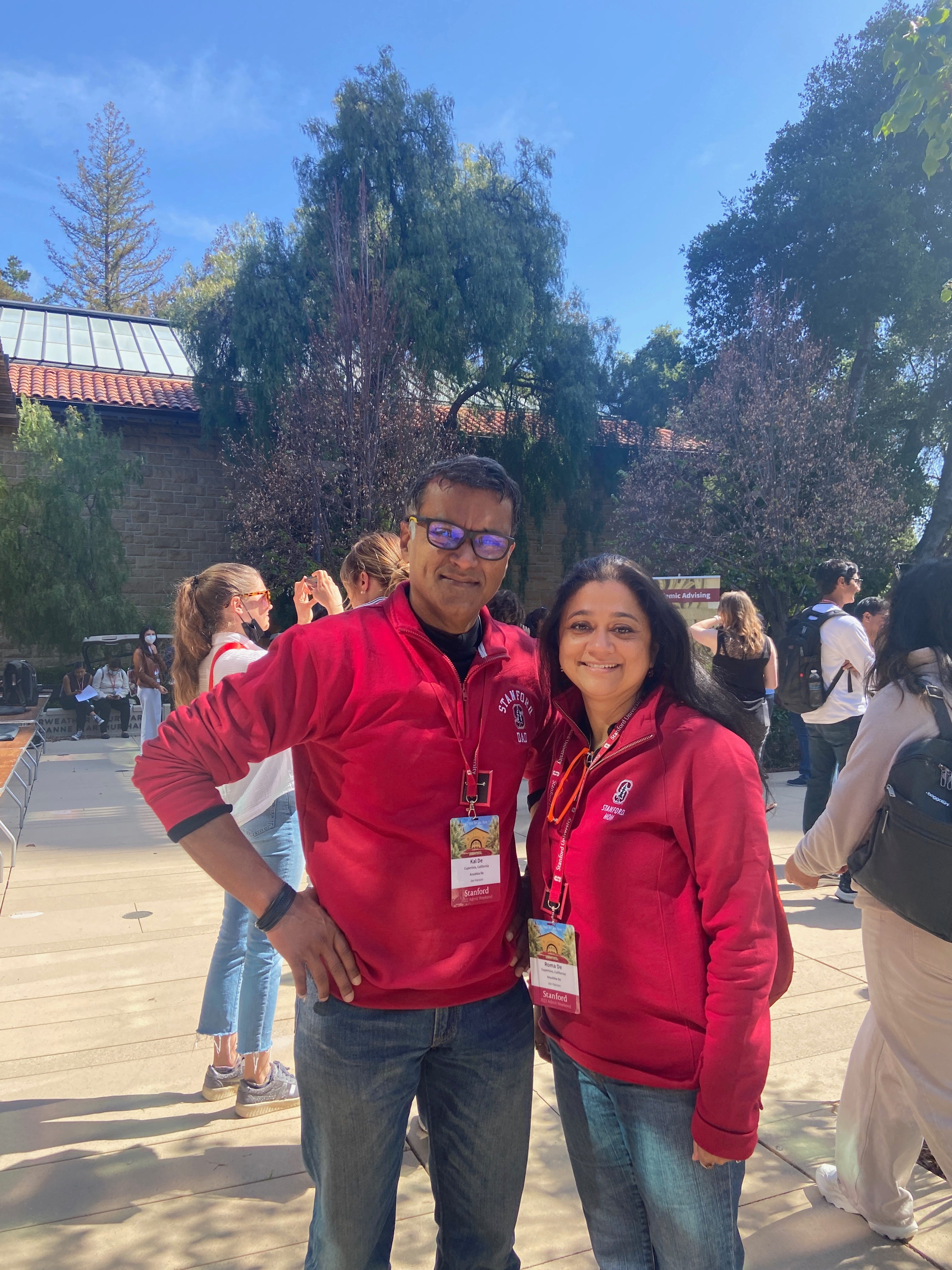
My parents got married a year after my mother arrived in the States and two years later, they moved to California. Amid new jobs and new apartments, they ate at their first Indian restaurant in the U.S. and went to Disneyland, had children and became American citizens. Now, my parents live in a city where traces of India are woven into the fabric of its people, from the Indian grocery store five minutes away where Hindi is spoken more frequently than English to the samosas that are sold at every event at the local high school. They have taught their children to speak Bengali and visit Kolkata every few years so that their children can listen to the shouts of peddlers that filter through the curtains that dance in the hot breeze and speak to the aunties whose bangles jingle when they pinch our cheeks and exclaim at our height. Now, my parents live in a house in the hills, surrounded by green trees and blue sky and an incredible, peaceful silence.
The summer before my junior year of high school, I read The Interpreter of Maladies by Jhumpa Lahiri, and I was entranced by the stories of immigrants from West Bengal — an older generation of immigrants exactly like my parents. My parents, to me, had existed in India as children and then existed in the U.S. as adults. I never thought about their first days in this country — their first apartment, their first friend, what the Michigan snow felt like to my mother or the tears my father couldn’t stop from falling when he landed at London Gatwick International Airport because he was surrounded by more wealth and opulence than he had ever seen, but couldn’t share any of it with his parents or fiancé who were an ocean away.
I am lucky enough to have never needed to consider the student visas and the working visas, or the expensive international calls to home where the blessed static covered the sound of voices close to tears.
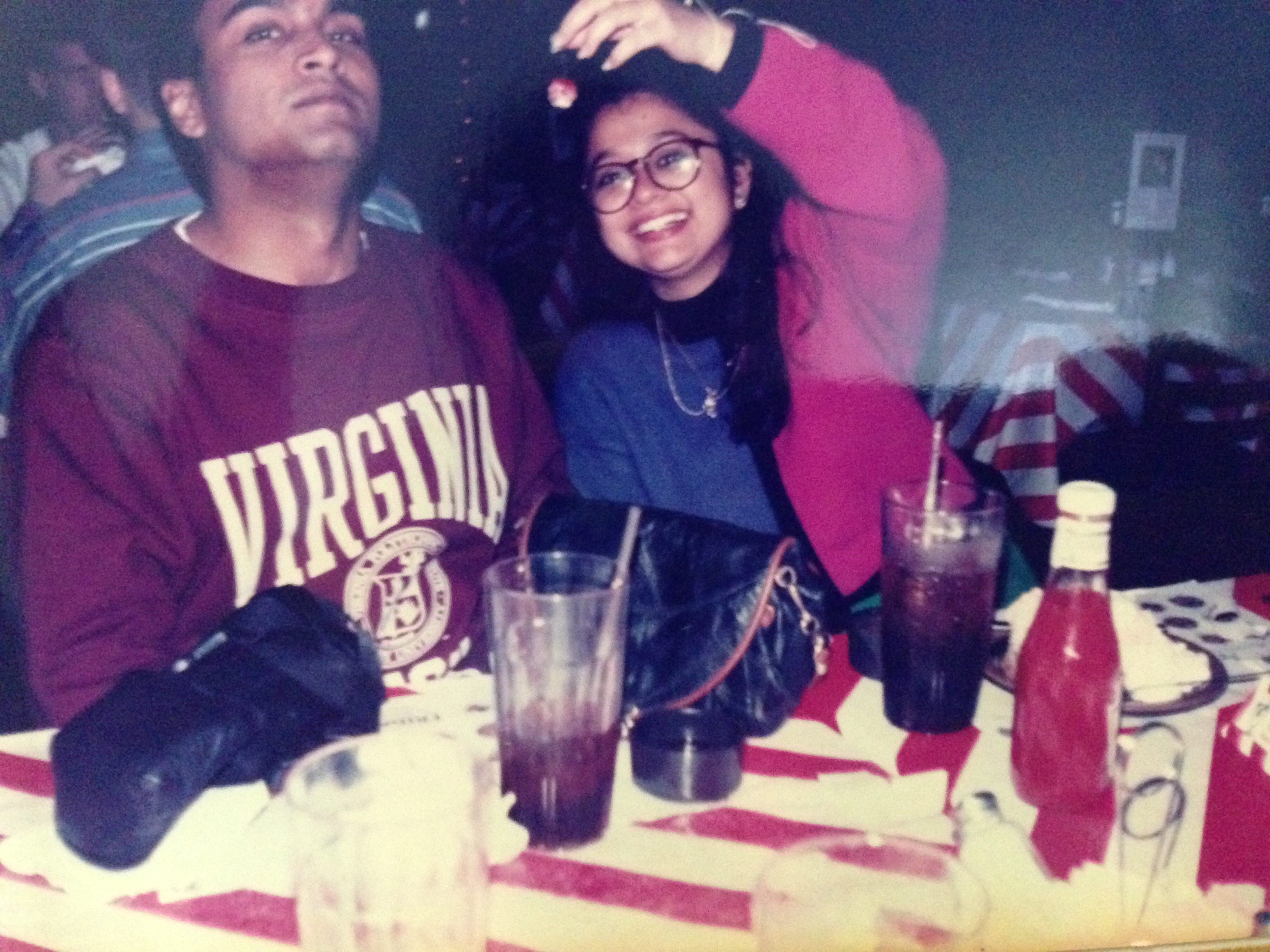
Even now, when I look at the pictures of my parents and their first years in the U.S., I imagine their lives through the same reddish glow that sits on top of each photo — a faded, romantic montage of road trips and college crewnecks. I have to remind myself that my parents, who at the time were barely two years older than me, learned to fill out vehicle registration papers and pay electricity bills in a country where everything was foreign. I forget the gravity of their experiences — I forget that they became adults 10,000 miles away from the only life they’d ever known.
When I take that moment to deeply consider my parents’ journey, I am reminded of this passage from The Interpreter of Maladies:
While the astronauts, heroes forever, spent mere hours on the moon, I have remained in this new world for nearly thirty years. I know that my achievement is quite ordinary. I am not the only man to seek his fortune far from home, and certainly I am not the first. Still, there are times I am bewildered by each mile I have travelled, each meal I have eaten, each person I have known, each room in which I have slept. As ordinary as it all appears, there are times when it is beyond my imagination.
I am the daughter of immigrants at a school, in a city, in a country built on the backs of immigrants and their daughters and sons. I am also a senior in college, eight months from graduating. Everyday, the concept of my future seeps into my thoughts as I walk to class and echoes in conversations with my friends. For so long, all of imaginable life has always been predictable. Middle school, high school, college, summer internships that always landed me back on campus, laughing with my best friends about our weekend plans. For the first time in my life, the future is amorphous — I can’t quite picture what it will look like over the next couple years.
The gravity of this realization is uncomfortable to contend with. I have my ambitions and dreams, but the path to big dreams is long and never clearly paved. And this is scary, of course. When I am confronted with the universe beyond what I know, I am reminded of my parents: of my mother, who boarded her first international flight at age 23 to a country she knew only from the movies. Of my father, who learned to drive and cook and laugh in a universe 10,000 miles away from the only one he’d ever known. I think of the inglorious sacrifices they made to explore the unknown, the unwavering self-believe they must have had in order to muster through days and years of strange people, strange food, strange accents. It is an story that has been told and retold since this nations very inception. It is quite ordinary,
We live now in a world where extraordinary seems to have lost much of its meaning. I strive to be extraordinary, and everyday, the thoughts of my future are grounded in this question. What do I think is extraordinary? What does it mean to me?
Yesterday, I saw Zohran Mamdami get elected to be the first South Asian mayor of what is objectively the best city in the world, and end his victory speech to Dhoom Machale. I saw him speak to taxi drivers in Hindi and highlight immigrants as the very fiber that makes up our nation’s fabric. I was inspired not just by the courage to wear so visibly the very identity that his naysayers belittle, but to also inspire generations of people younger and older to feel pride in their own identities. Mamdani’s future is amorphous. Armed only with big dreams against fierce adversaries, he is fighting for a better life for an entire city of people. This, I find extraordinary.
And then I think of my parents and their journey. Sometimes, I think we are so surrounded by this phenomenon of leaving one’s home with only the faintest glimmer of hope for better that we begin to think of it as ordinary.
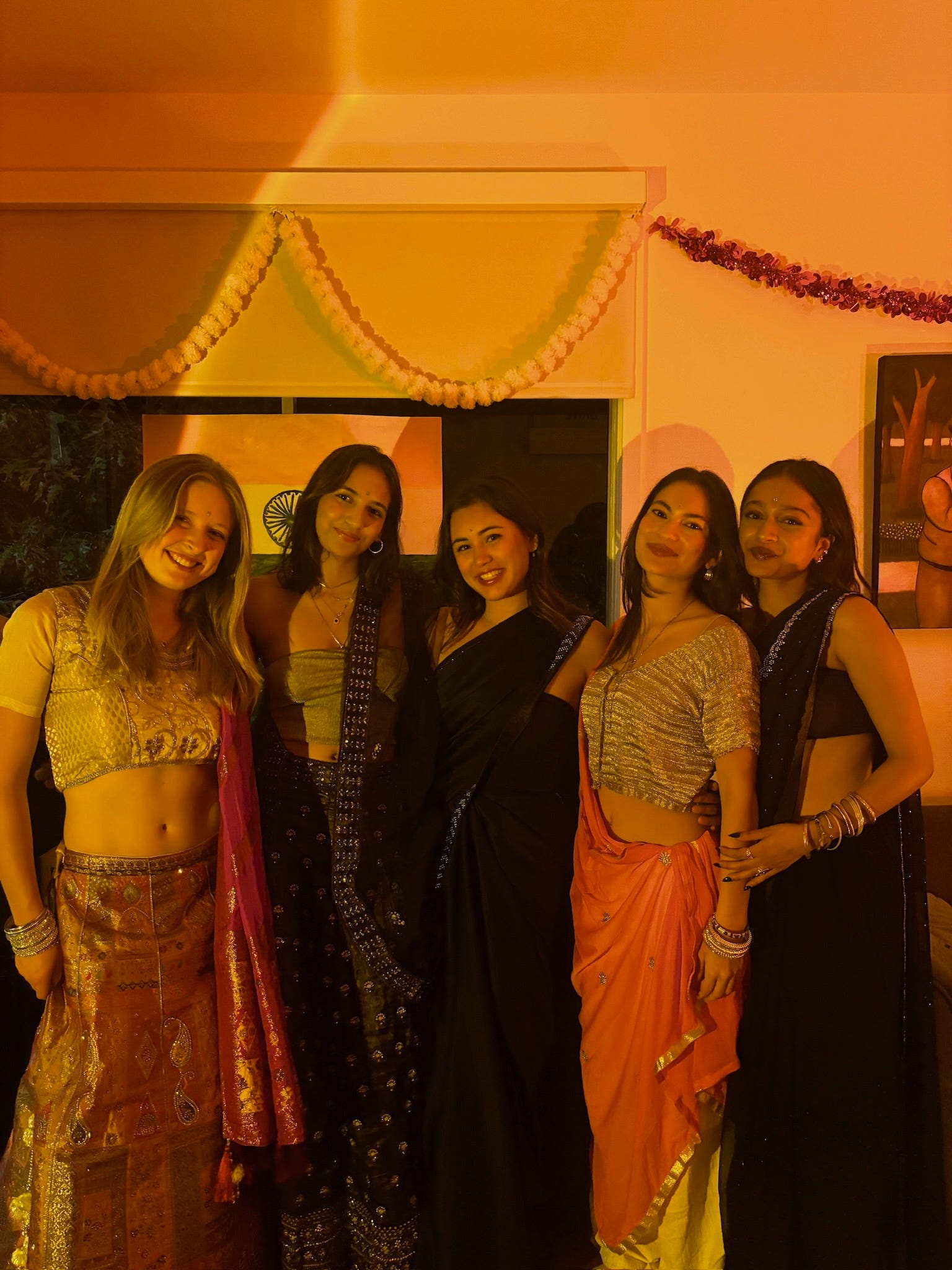
I wrote most of this piece as a junior in high school, still too young to comprehend the courage it must have taken my parents, their friends, the aunties at the eyebrow salon and uncles at the Indian grocery store, to leave the only place they’ve ever known at an age when life has just begun. Now, I am at that age, nervous about the future that lies right outside my front door. I think of my parents, of all these people in my community who raised me and taught me to love and laugh and take pride in who I am, who found prosperity and merit and hard work in a place that was not always kind to them. I think of the world they have built for us, one where Zohran Mamdani is the mayor-elect of New York City and I throw a Diwali party with my roommates and dress them up in Indian clothes. To me, the sacrifices you have made are anything but ordinary. The courage you have had to expect little but never lose unwavering hope for more is anything but ordinary.
Indeed, it is beyond my imagination.